Wu Hufan
Introduction
Wu Hufan (1894-1968) was a pivotal figure in the world of Chinese ink painting. As one of the most representative artists of the Shanghai style, or "haipai," Wu played an influential role in the development of modern Chinese art in the 20th century. His works are celebrated for their innovative approach to traditional Chinese ink art, incorporating modern elements while maintaining a deep respect for classical techniques. Wu's legacy is preserved through numerous exhibitions, such as the one at the China Art Museum Shanghai, which highlights his contributions to the art world.
Early Life and Education
Wu Hufan was born into a prestigious family in Suzhou, Jiangsu province, in 1894. He was the grandson of Wu Dazheng, a renowned scholar, which afforded him a rich cultural and intellectual upbringing. This environment nurtured his early interest in literati art—an art form that emphasized scholarly pursuits and was traditionally practiced by the educated elite. Wu's education was deeply rooted in the classical traditions of Chinese culture, which he later blended with the modern urban influences he encountered upon moving to Shanghai in 1924. The vibrant cultural scene of Shanghai exposed Wu to diverse artistic styles, which played a crucial role in shaping his unique approach to ink painting.
Artistic Career
Painting Style and Techniques
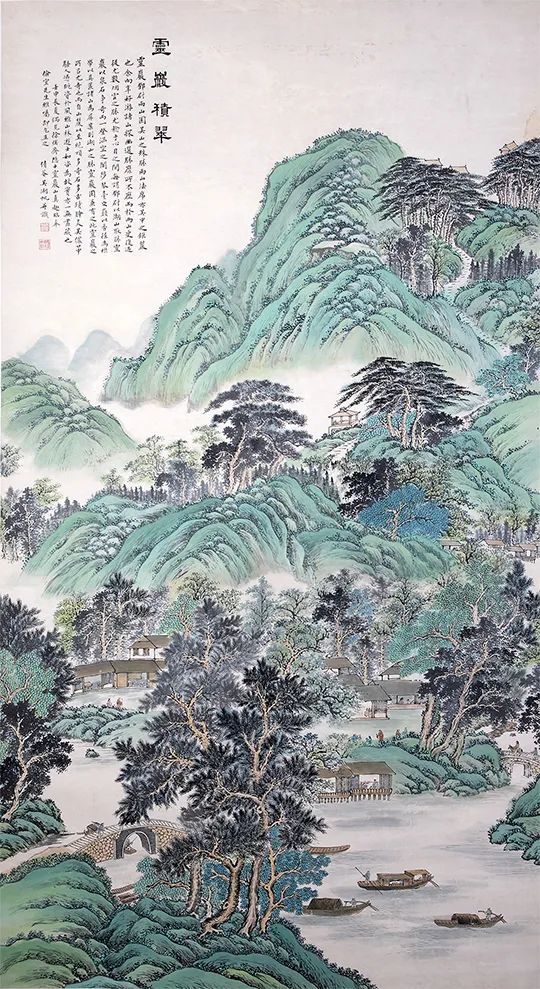
Wu Hufan is renowned for his innovative reinterpretations of traditional Chinese ink painting. He introduced a vibrant palette to the monochromatic tradition of ink art, employing bright colors and lively imagery that resonated with ordinary people. This approach contrasted with the prevailing artistic preferences of his contemporaries, who often sought to express spiritual and intellectual pursuits through art. Wu's paintings often featured landscapes that were infused with a harmonious balance of light, shadow, and color, reminiscent of Western artistic techniques. His work Yun Biao Qi Feng (The Steep Peaks Above the Clouds) exemplifies this synthesis, combining traditional Chinese perspectives with Western notions of light and color.
Major Works
Among Wu Hufan's most celebrated pieces is Yun Biao Qi Feng, which gained significant attention when exhibited in Shanghai in 1936. This work is notable for its complex interplay of light and shadow, as well as its use of rich color layers, which collectively offered a fresh perspective on Chinese landscape painting. Wu's ability to blend traditional themes with modern techniques earned him a prominent place in China's art scene. His works are not only appreciated for their aesthetic qualities but also for the innovative ways they bridged cultural and artistic boundaries.
Influence and Legacy
Wu Hufan's influence on Chinese art is profound, as he played a critical role in the modernization of traditional ink painting. By incorporating modern elements and exploring new artistic directions, Wu contributed to the evolution of the Shanghai style, which continues to be a significant force in Chinese art. His legacy is celebrated through exhibitions and retrospectives that highlight his role in shaping modern Chinese art. Wu's ability to maintain a deep respect for tradition while embracing contemporary influences offers valuable insights for current and future generations of artists seeking to innovate within the framework of traditional art forms.
Art Collection and Connoisseurship
In addition to his prowess as an artist, Wu Hufan was also a dedicated art collector and connoisseur. He played a vital role in preserving Chinese cultural heritage, particularly through his efforts in collecting and donating significant works of art. His contributions to art preservation are exemplified by his donation of rare books, such as the only surviving copy of A Catalogue of Plum Blossoms, to the Shanghai Museum. This book, produced during the Song Dynasty (960–1279), is an important artifact that documents the aesthetic values and cultural practices of ancient China. Wu's dedication to preserving such works underscores his commitment to safeguarding China's artistic legacy for future generations.








